BIN Attacks: How They Work and How to Prevent Them
BIN attacks can create financial and operational costs for businesses while putting cardholders at risk of unauthorized payments. They can also make it more difficult for merchants and payment providers to identify suspicious activity.
This guide covers how BIN attacks work, their potential effects, the warning signs to look for, and the steps businesses and cardholders can take to reduce their risk.
What Is a BIN Attack?
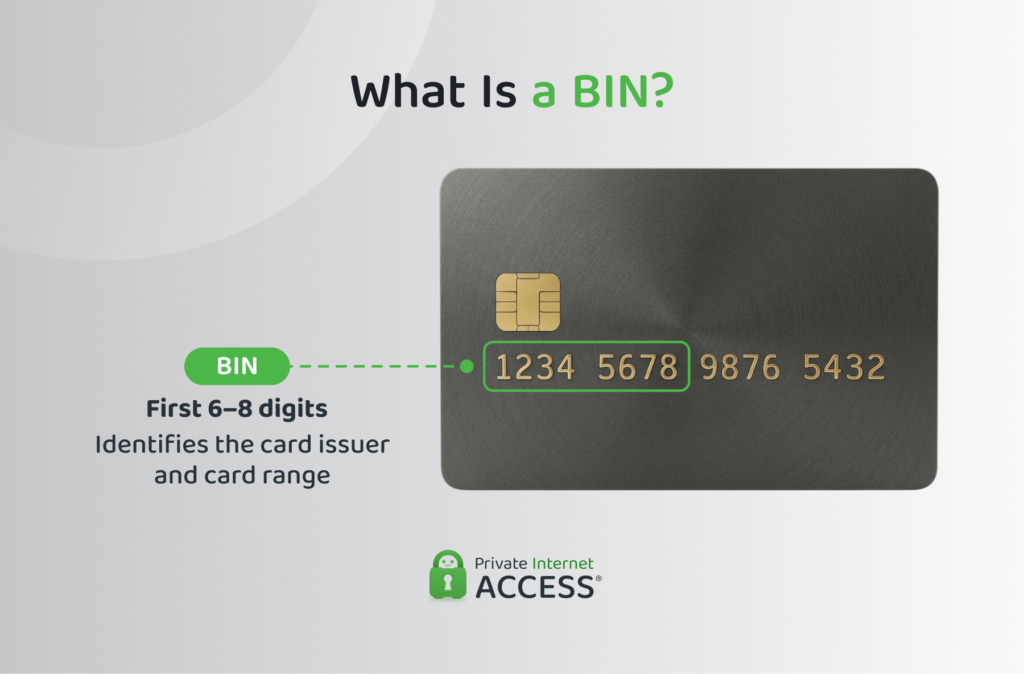
A Bank Identification Number (BIN) is the first 6 to 8 digits of a card number that identifies the card issuer and card range. A BIN attack is a type of payment fraud in which criminals use a known BIN to generate and test possible card numbers.
The aim is to identify valid details that can be used for fraudulent purposes.
How Does a BIN Attack Work?
Although the exact process can vary, a BIN attack generally involves three broad steps:
- Generating card details: A known BIN provides the starting digits, allowing criminals to produce possible card numbers. Depending on what information is already available, they may also test expiration dates or security codes.
- Checking which details are valid: Automated tools can submit these details through online payment or authentication processes to identify which combinations correspond to valid cards.
- Using valid payment information: Once attackers confirm card details, they can be used to make unauthorized transactions or sold to other fraudsters.
BIN Attack vs. Card Testing and Carding
These terms describe related types of payment fraud, but they differ in what information the attacker has and how it’s used.
With card testing, the attacker already has card information and checks whether the details can be used for fraudulent payments. With carding, attackers use stolen card details to make unauthorized purchases or other fraudulent transactions.
“Enumeration” is a broader term for the systematic testing of payment card information to identify valid details. Both BIN attacks and card testing can be described as forms of enumeration.
What Businesses Are Vulnerable to BIN Attacks?
BIN attacks can affect any business that accepts card payments online or without the physical card being present, but some businesses may face greater exposure because of the volume or nature of their transactions. Examples include:
- E-commerce: High volumes of online payments can make it easier for attackers to submit large numbers of payment attempts and test card details at scale.
- Digital goods: Products and services such as software and subscriptions may be delivered immediately after payment, giving businesses less time to identify suspicious activity before they provide access.
- Travel and hospitality: Customers may make bookings from different locations, making some unusual payment patterns harder to distinguish from legitimate activity.
Potential Effects of BIN Attacks
A successful BIN attack can have financial and operational consequences for businesses, payment providers, and cardholders, including:
- Financial loss: Cardholders may experience unauthorized transactions, while merchants and issuers may incur costs to investigate, reverse, or reimburse them.
- Chargebacks: Merchants may incur fees and administrative costs when cardholders dispute transactions they don’t recognize.
- Reputational damage: Customers may lose confidence in a business or payment service if they associate it with inadequate fraud prevention.
- Regulatory penalties: Failing to meet applicable requirements for managing payment fraud may result in fines or other enforcement measures.
- Operational disruption: Large numbers of payment attempts can put extra pressure on payment systems, affecting the experience for customers.
- Disruption for cardholders: Repeated testing can result in declined transactions, alerts or temporary restrictions on accounts when the system detects suspicious activity.
How to Detect a BIN Attack
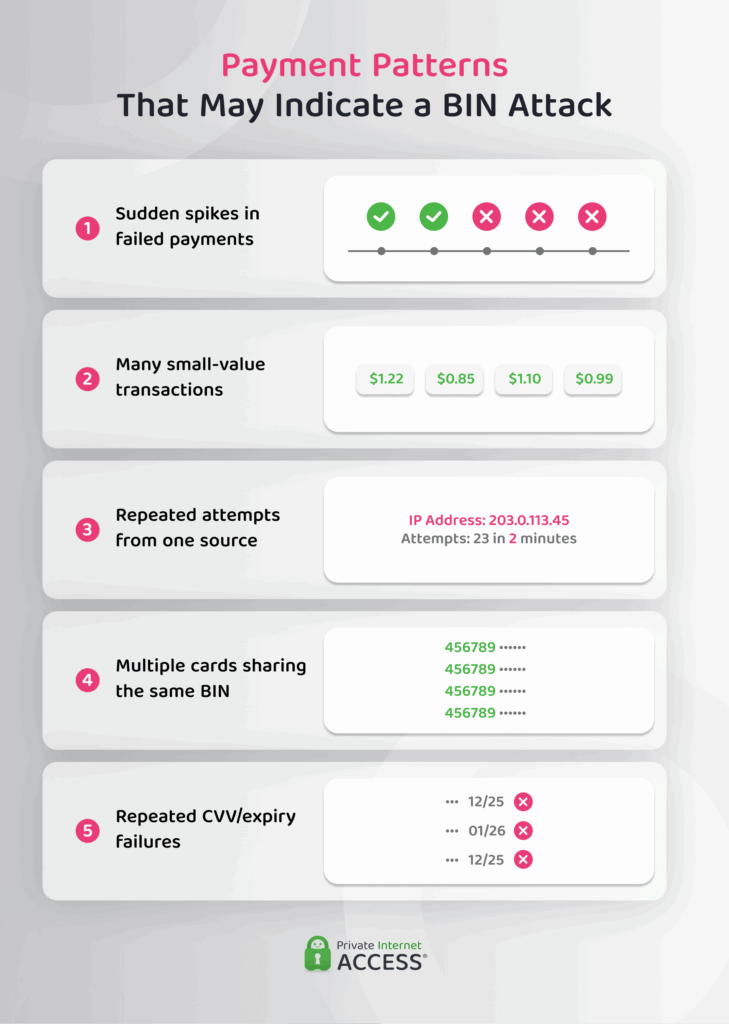
No single signal confirms a BIN attack and these patterns can also occur with other types of payment fraud or legitimate activity. As such, a combination of these may provide a stronger indication of an attack:
- Spikes in failed payments: Large numbers of declined payment attempts within a short period can occur when automated tools test multiple card details.
- Surge in low-value transactions: Small payments may be used to check whether card details are valid before attackers try larger purchases.
- Repeated activity from the same source: Several instances from the same IP address or device can suggest that someone is using automated tools to test payment details.
- Activity concentrated around a BIN: Many attempts involving cards that share the same BIN might signal that attackers are testing cards within a particular issuing range.
- Repeated verification failures: A high number of failed CVV or expiration-date checks might originate from attempts to test different combinations of card details.
How to Protect Against BIN Attacks
Businesses and cardholders can take different measures to reduce the risk and effects of BIN attacks.
Measures for Businesses
Controls like these can make automated testing harder and help businesses identify unusual payment activity:
- Rate limiting: Restricting how frequently payments can be attempted can make it harder for automated tools to test large numbers of card details.
- Bot detection and CAPTCHAs: Identifying bots and using challenges that distinguish them from human users can help limit repeated payment requests.
- Velocity monitoring: Tracking the frequency of payment activity across signals such as devices or BINs can help identify unusual patterns.
- Payment authentication: Supplementary customer verification with solutions such as 3-D Secure can provide added protection, so card details alone can’t authorize payments.
- Fraud detection tools: Software that analyses payment activity can identify patterns associated with automated testing and help businesses decide when to block, review, or apply additional checks to a transaction.
- Address and card verification: Checks such as Address Verification Service (AVS) and CVV verification can provide further signals when assessing whether a payment is legitimate.
Measures for Cardholders
Because cardholders can’t control the security measures used by merchants or payment providers, the focus is on spotting unauthorized activity and taking action when it occurs:
- Transaction alerts: Banking alerts can notify cardholders when someone makes a transaction, helping them quickly identify unauthorized activity.
- Account monitoring: Checking bank statements and account activity can aid in spotting unfamiliar transactions.
- Contact your bank: Reporting unfamiliar transactions promptly can help resolve the issue and limit further losses.
Can a VPN Prevent BIN Attacks?
A virtual private network (VPN) doesn’t prevent criminals from generating or testing card numbers, and it doesn’t determine whether a payment processor authorizes a transaction. However, it can still provide useful protection when making payments online.
This is because a VPN encrypts internet traffic between your device and the VPN server, which can help prevent someone from intercepting sensitive information over your network. This is particularly useful when accessing payment services on unsecured networks such as public Wi-Fi.
Related: The Pros and Cons of Using a VPN
FAQ
What is a BIN attack?
A BIN attack is a type of card fraud in which criminals use a known Bank Identification Number (BIN) to generate and test possible card details with automated tools, looking for valid card information that can be used for unauthorized transactions.
How does a BIN attack work?
BIN attacks often involve generating possible card numbers from a known BIN and using automated tools to test whether the resulting card details are valid. Attackers may use low-value transactions or other authorization attempts to test the details, then use or sell information that appears valid for fraudulent purposes.
What is a BIN number on a credit card?
The bank Identification Number (BIN) is the opening sequence of six to eight digits on a credit, debit, or prepaid card. It identifies the card issuer and provides information about the card and its payment network.
How can BIN attacks be prevented?
Businesses can reduce the risk of BIN attacks by limiting repeated payment attempts, using bot detection and CAPTCHAs, and monitoring unusual transaction patterns. Cardholders can limit the impact by monitoring their accounts and reporting unrecognized transactions.
Can a VPN stop a BIN attack?
No. A VPN can’t stop BIN attacks or prevent unauthorized card testing. It can, however, help to secure the internet connection used to access online payment services.
Can a BIN attack happen without my physical card?
Yes. BIN attacks typically target online payments, so criminals don’t need access to the physical card to test payment details.
