What Is HTTP/3? Everything You Need to Know
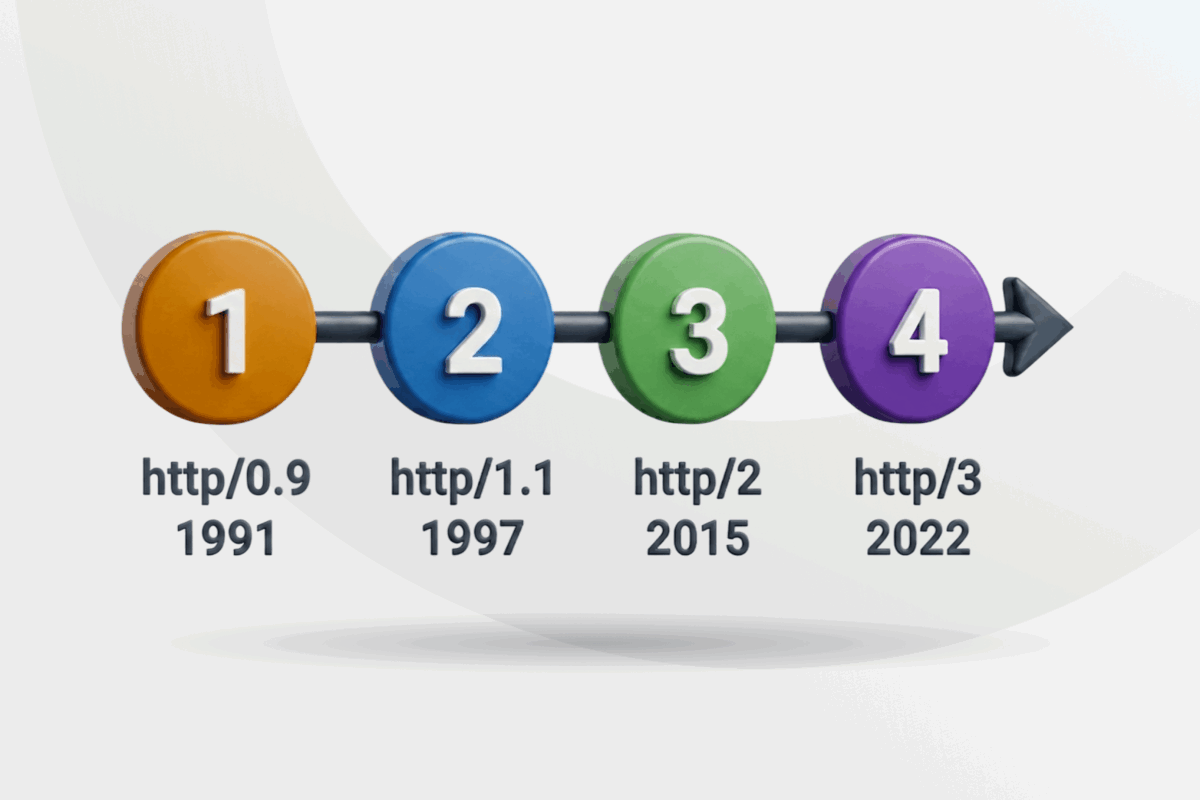
HTTP/3 represents one of the biggest changes to web communication in years. Designed to improve how data moves across the internet, it is now supported by major browsers and many popular websites.
This guide explains what HTTP/3 is, how it works, how it differs from earlier Hypertext Transfer Protocol (HTTP) versions, and what its adoption means for modern web browsing.
Table of Contents
HTTP/3 ExplainedWhy Was HTTP/3 Needed?
How Does HTTP/3 Work?
When Are HTTP/3’s Benefits Most Noticeable?
What Does HTTP/3 Mean for Privacy?
FAQs
HTTP/3 Explained
HTTP/3 is the latest version of HTTP, the protocol that browsers and websites use to exchange information. Every time you load a webpage, stream a video, or submit a form online, HTTP helps manage that communication.
The biggest difference between HTTP/3 and earlier HTTP versions is that it relies on the newer transport protocol QUIC rather than the Transmission Control Protocol (TCP).
Why Was HTTP/3 Needed?
The Internet Engineering Task Force (IETF) created HTTP/3 to address some of TCP’s limitations. While HTTP/2 significantly improved web performance, it still relies on TCP, a protocol designed long before modern browsing habits emerged.
Today, people switch between Wi-Fi and mobile networks, stream high-resolution content, and expect websites and online services to respond instantly. Under these conditions, TCP can introduce delays because lost data and network changes often require additional recovery steps before communication can continue without issues.
How Does HTTP/3 Work?
Most online activities involve data moving between your device and a website or service. To make that possible, the data is broken into small pieces called packets, which travel across the network and reassembled at their destination.
HTTP/3 uses QUIC to manage sending and receiving those packets. Unlike earlier HTTP versions that rely on TCP, QUIC runs on top of a protocol called UDP that offers greater flexibility in how it handles connections.
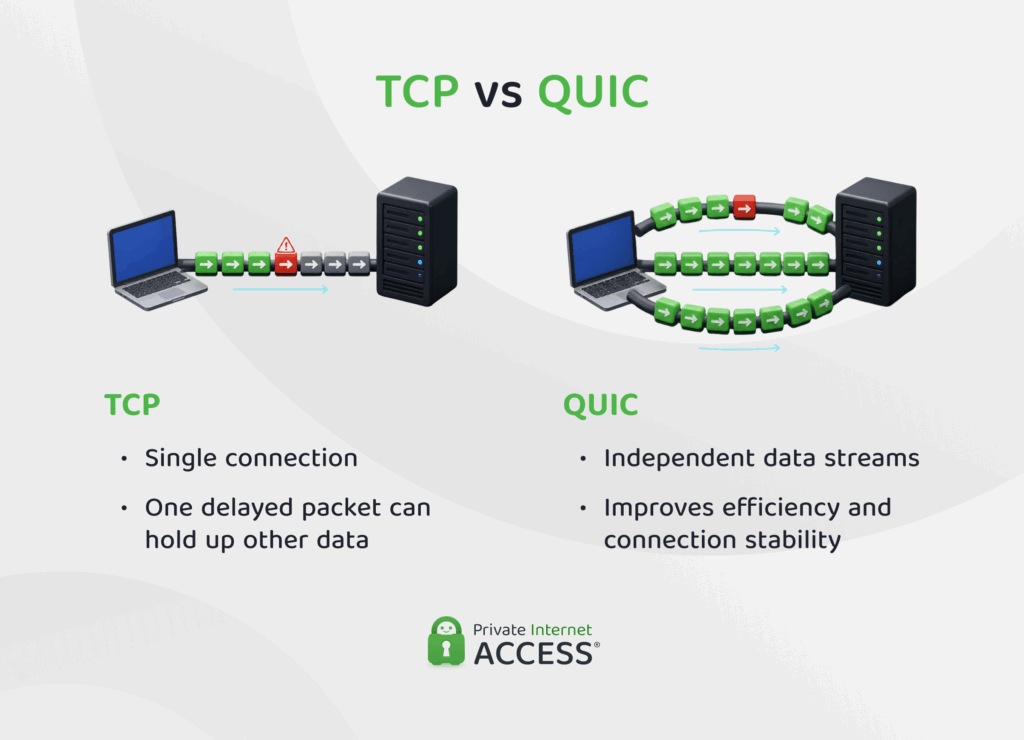
When both a browser and a website support HTTP/3, they can automatically use it without requiring any action from the user. If HTTP/3 isn’t available, browsers typically fall back to HTTP/2 or HTTP/1.1, allowing websites to continue working as usual.
How QUIC Improves Web Connections
The main benefits of HTTP/3 come from how QUIC handles data and connections differently from older protocols. This includes:
Reduced delays caused by lost packets: A missing packet can delay other data on the same connection, a problem known as head-of-line blocking. QUIC reduces these delays by handling multiple streams of data within the same connection independently.
Faster connection setup: The client and server may require numerous back-and-forth exchanges before transferring data. QUIC minimizes this overhead, reducing delays before data can begin flowing.
Better handling of network changes: Switching between networks can require connections to be re-established. QUIC supports a feature called connection migration, which helps reduce interruptions when switching between networks, such as moving from Wi-Fi to mobile data.
When Are HTTP/3’s Benefits Most Noticeable?
HTTP/3’s advantages are often more apparent on less predictable networks, such as mobile networks, public Wi-Fi, and congested connections. On fast, stable connections, such as fibre broadband, HTTP/2 may already perform well enough that the difference is difficult to notice.
HTTP/2 vs. HTTP/3: Overview of the Differences
HTTP/2 and HTTP/3 are related, but the move from TCP to QUIC changes how HTTP/3 establishes, maintains, and recovers connections.
Here’s how they compare:
| Connection protocols | HTTP/2 | HTTP/3 |
| Transport protocol | TCP | QUIC |
| Lost packets | Can delay other data on the connection | Less likely to delay other HTTP streams |
| Connection setup | More connection-establishment overhead | Faster connection setup |
| Switching networks | May require a new connection | Supports connection migration |
What Does HTTP/3 Mean for Privacy?
HTTP/3 uses Transport Layer Security (TLS) 1.3, a widely used encryption standard that protects data as it travels across a network. Unlike earlier HTTP versions that allowed websites to deploy them with or without encryption, HTTP/3 improves privacy by requiring encryption as part of the protocol.
This helps prevent other parties on the network from reading the exchange of data, such as page content, messages, and information submitted online.
However, HTTP/3 doesn’t provide complete privacy. While it helps protect transmitted data, internet service providers and other network operators can still observe information about the connection, including IP addresses and which websites you’re accessing.
Read more: What Is IP Tracking and How Does It Work?
HTTP/3 and VPNs: What’s the Difference?
HTTP/3 and virtual private networks (VPNs) serve different purposes. The table below highlights some of the key differences:
| Feature | HTTP/3 | A VPN |
| Scope of protection | Individual HTTP/3 connections | Internet traffic routed through the VPN |
| Availability | Depends on website support | Works without depending on website support |
| Privacy focus | Protects transmitted data between your device and the website | Encrypts traffic between your device and the VPN server and masks your IP address |
| Setup | Used automatically when supported | Requires VPN software or configuration |
HTTP/3 and VPNs are not competing technologies. Because they address different aspects of privacy and security, they can work together. In most cases, HTTP/3 works as normal while connected to a VPN.
Read more: HTTPS vs. VPN – Which Protects Your Privacy Better?
FAQs
What is HTTP/3?
HTTP/3 is the latest version of HTTP, the protocol browsers and websites use to exchange information. Unlike earlier HTTP versions, it uses the QUIC transport protocol instead of TCP, helping reduce delays and improve connection reliability.
How does HTTP/3 work compared to older HTTP versions?
HTTP/3 works by using QUIC instead of TCP to send and receive data across a network. QUIC handles multiple streams of data within the same connection independently, helping reduce delays caused by lost packets, speed up connection setup, and improve how connections handle network changes.
What is the difference between HTTP/2 and HTTP/3?
The main difference between HTTP/2 and HTTP/3 is the transport protocol they use. HTTP/2 relies on TCP, while HTTP/3 uses QUIC over UDP. Because QUIC can manage multiple streams of data and establish connections more effectively, HTTP/3 can reduce delays caused by lost packets and speed up connection setup. HTTP/3 also requires encryption as part of the protocol.
Why does HTTP/3 use QUIC?
HTTP/3 uses QUIC because it establishes and maintains web connections more efficiently. Compared to TCP, QUIC can speed up connection setup, reduce delays caused by lost packets, and better handle network changes, helping websites and online services to respond more smoothly.
Can a VPN affect HTTP/3 performance or connectivity?
Most VPNs support HTTP/3 traffic and allow it to function normally. However, HTTP/3 relies on UDP, and in rare cases, some networks or VPN configurations may restrict UDP traffic. In those situations, browsers usually fall back to HTTP/2, allowing websites and online services to continue working.
