What Is the NIST Cybersecurity Framework? A Complete Guide
How do you know if your organization is ready to prevent, detect, and respond to cyber threats? Many businesses invest in security tools but struggle to build a clear security strategy.
That’s where the NIST Cybersecurity Framework comes in. It provides a flexible set of guidelines that helps organizations understand their risks, strengthen their defenses, and improve their overall cybersecurity posture.
In this guide, we’ll explain what the NIST Cybersecurity Framework is, how it works, and what’s new in the NIST Cybersecurity Framework 2.0.
Table of Contents
The NIST Cybersecurity Framework ExplainedThe 6 Core Functions of NIST CSF
Key Changes in NIST CSF 2.0
Which Industries Can Benefit From the CSF?
Implementation Tiers
How To Implement the NIST Cybersecurity Framework
Common NIST CSF Implementation Challenges
How VPNs Support NIST Cybersecurity Framework Compliance
FAQ
The NIST Cybersecurity Framework Explained
The NIST Cybersecurity Framework (CSF) is a voluntary, risk-based set of guidelines and security standards created by the National Institute of Standards and Technology (NIST). It helps organizations understand, manage, and reduce cybersecurity risk in a structured way.
It doesn’t force specific tools or controls. Instead, it focuses on outcomes and good security practices that organizations can adapt to their needs.
The framework first targeted critical infrastructure, such as energy, healthcare, and finance. But with the NIST Cybersecurity Framework 2.0, its scope expanded. It now applies to all types of organizations, regardless of size or industry. That change made it more practical for businesses that don’t fall under traditional critical infrastructure sectors.
The CSF is voluntary, and most companies aren’t required by law to use it. However, some federal agencies and government contractors must align with NIST standards for security and procurement. It’s not a compliance law and doesn’t certify organizations.
The 6 Core Functions of NIST CSF
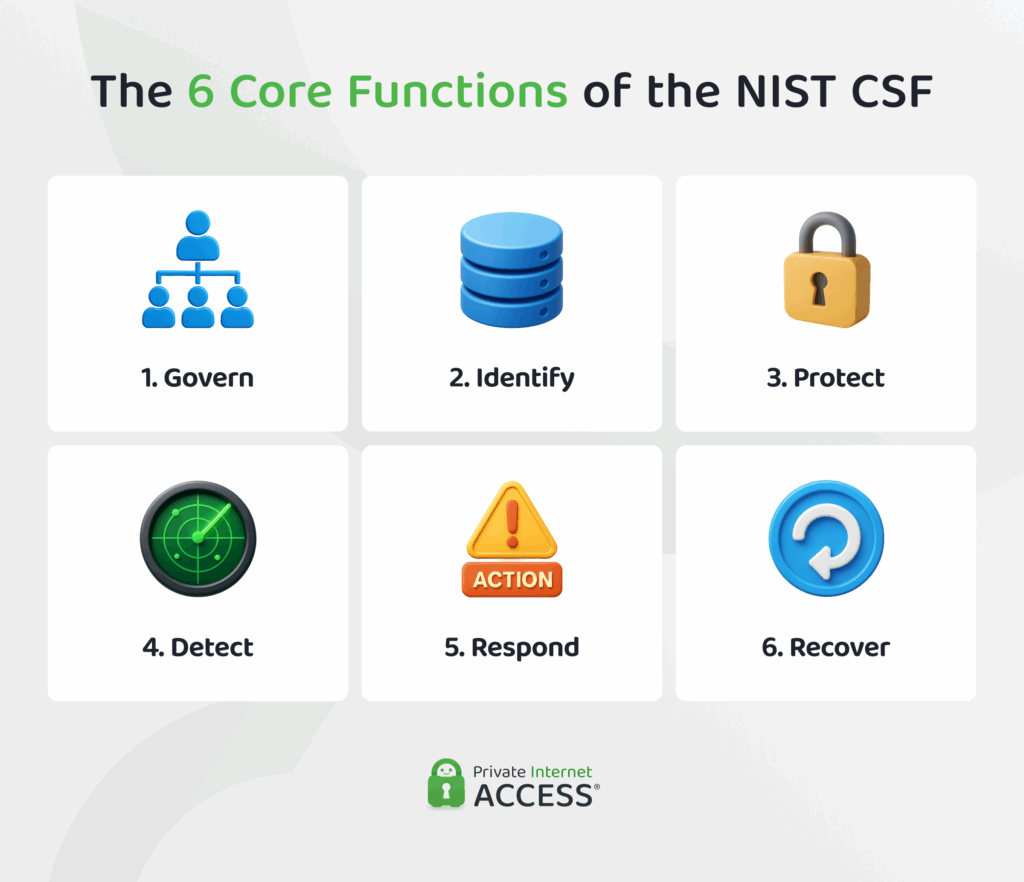
The NIST CSF focuses on six core functions. They show what an organization needs to do step by step, from setting strategy and understanding risks to protecting systems, detecting threats, responding to incidents, and recovering after an attack. Together, they give structure to a complete security program instead of treating cybersecurity as separate tasks.
Govern (GV) – New in 2.0
Govern is the new core function in CSF 2.0. It puts governance at the center of cybersecurity. It focuses on how an organization sets risk strategy, defines roles, and makes security decisions. It also covers oversight of supply chains and how third parties affect risk. This function connects all other CSF areas and ensures security aligns with business goals.
For example, an organization might use the Govern Function to establish cybersecurity policies, assign security responsibilities to leadership teams, and include security requirements in contracts.
Identify (ID)
Identify helps organizations understand their environment. This includes assets, systems, data, and risks. It supports visibility into what needs protection and where weaknesses may exist.
In practice, the Identify Function helps a business to create an inventory of devices, applications, and data assets, then assess which systems are most critical to business operations and most vulnerable to attack.
Protect (PR)
Protect focuses on safeguards that reduce risk. This includes access control, data protection, and identity management. Secure remote access also fits here, including the use of tools like VPNs to protect network traffic and limit unauthorized access.
Common activities under this function include enabling multi-factor authentication, encrypting sensitive data, limiting user permissions, and securing remote connections through VPN technology.
Detect (DE)
Detect is about finding security events early. It includes monitoring systems, logging activity, and setting up alerts to spot unusual behavior or potential threats.
For instance, security teams may establish normal activity baselines and monitor for deviations, such as unexpected login attempts, unusual network traffic, or unauthorized system changes.
Respond (RS)
Respond covers actions taken during a security incident. This includes containment, investigation, communication, and steps to limit damage.
If a ransomware attack occurs, the Respond function guides actions such as isolating affected systems, investigating the attack path, notifying stakeholders, and coordinating recovery efforts.
Recover (RC)
Recover focuses on restoring normal operations after an incident. It includes system recovery, data retrieval, and reviewing what happened to improve future response.
Recovery efforts may include restoring systems from backups, bringing essential services back online, communicating with affected parties, and updating security procedures based on lessons learned from the incident.
Key Changes in NIST CSF 2.0
The NIST Cybersecurity Framework first appeared in 2014 (CSF 1.0) in response to a US government push to improve cybersecurity in critical infrastructure. In 2018, version 1.1 introduced small updates to improve clarity and better reflect industry use1.
NIST CSF 2.0 builds on that foundation but introduces several key changes. One of the biggest updates is the addition of the Govern function, which wasn’t a separate function in 1.1. It brings risk management and oversight into the center of the framework and connects it to all other functions.
The structure was also refined, with a slight consolidation from 108 to 106 subcategories. This improves consistency without changing the core intent of the framework.
Another major change is scope. CSF 1.1 focused on critical infrastructure, while NIST designed CSF 2.0 for all types of organizations, including private companies, public sector groups, and nonprofits.
Which Industries Can Benefit From the CSF?
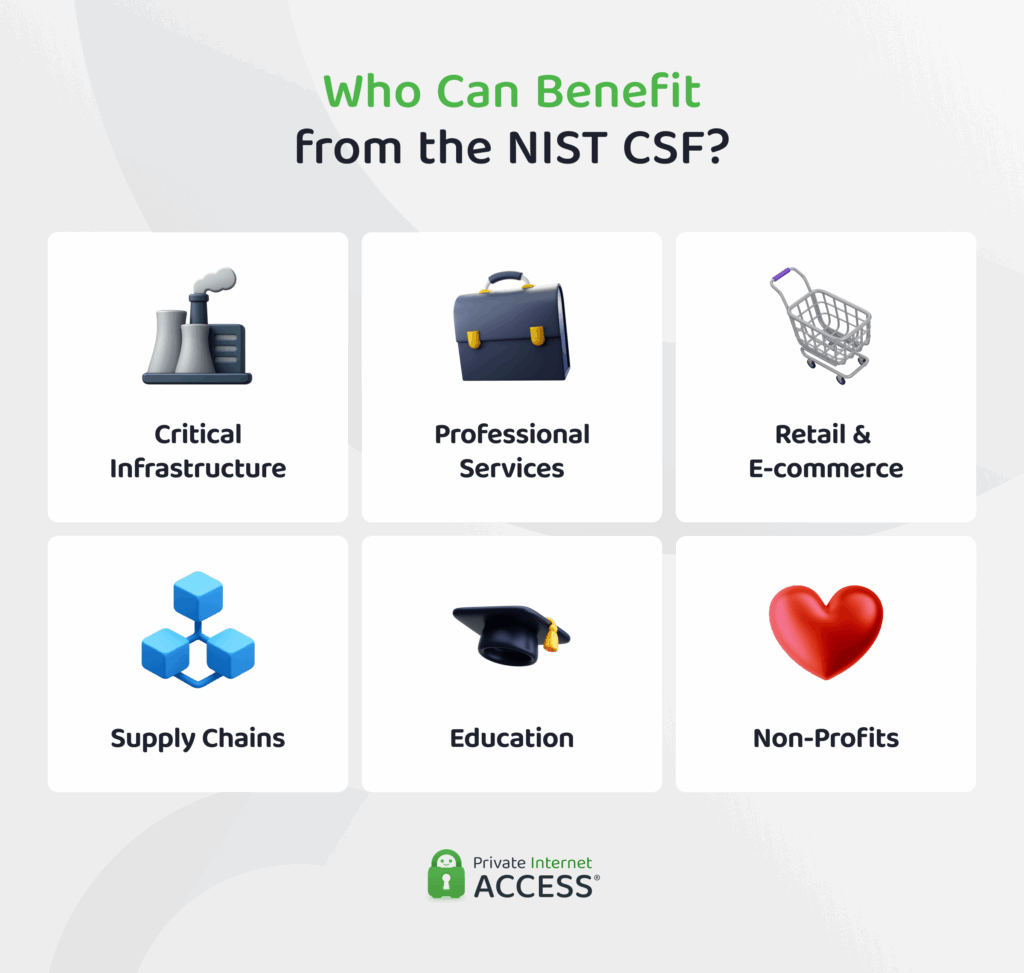
The NIST CSF can work across many types of organizations, not just one sector. It can scale up or down depending on the size and risk level of the organization. Here are some of the industries that may find the framework useful:
- Critical infrastructure: NIST was first built with industries such as energy, healthcare, and finance in mind, where cyber risk can have a wide real-world impact. Today, its use has expanded far beyond that.
- Supply chains: These companies often rely on third parties and shared systems. The framework helps organizations manage vendor risk and improve visibility across connected partners.
- Retail and e-commerce: NIST offers an accessible way for online stores to protect customer data, payment systems, and online platforms that face constant attacks.
- Educational institutions: Often faced with limited security resources, these organizations can employ the CSF to help secure student data, learning platforms, and campus networks.
- Professional services: Firms such as legal, consulting, and accounting companies use it to protect sensitive client information and meet client security expectations.
- Non-profits: These organizations often handle personal data but may not have large security teams or budgets.
Implementation Tiers
The NIST CSF includes four Implementation Tiers that help organizations understand how well their cybersecurity practices integrate into daily operations. They provide context for how organizations manage cybersecurity risk2.
Tier 1: Partial
Organizations at the Partial level take an informal approach to cybersecurity. Security activities may happen when needed, but processes are not documented or routinely followed.
Tier 2: Risk-Informed
At this level, organizations understand cybersecurity risks and consider them when making decisions. Organizations may document some security practices, but they may apply them consistently across all departments.
Tier 3: Repeatable
Organizations in the Repeatable tier have established policies and procedures that are consistently followed. Businesses integrate cybersecurity practices into business operations and review them on a regular basis.
Tier 4: Adaptive
The Adaptive tier represents a mature cybersecurity program that continuously improves based on changing threats, business needs, and lessons learned.
How To Implement the NIST Cybersecurity Framework
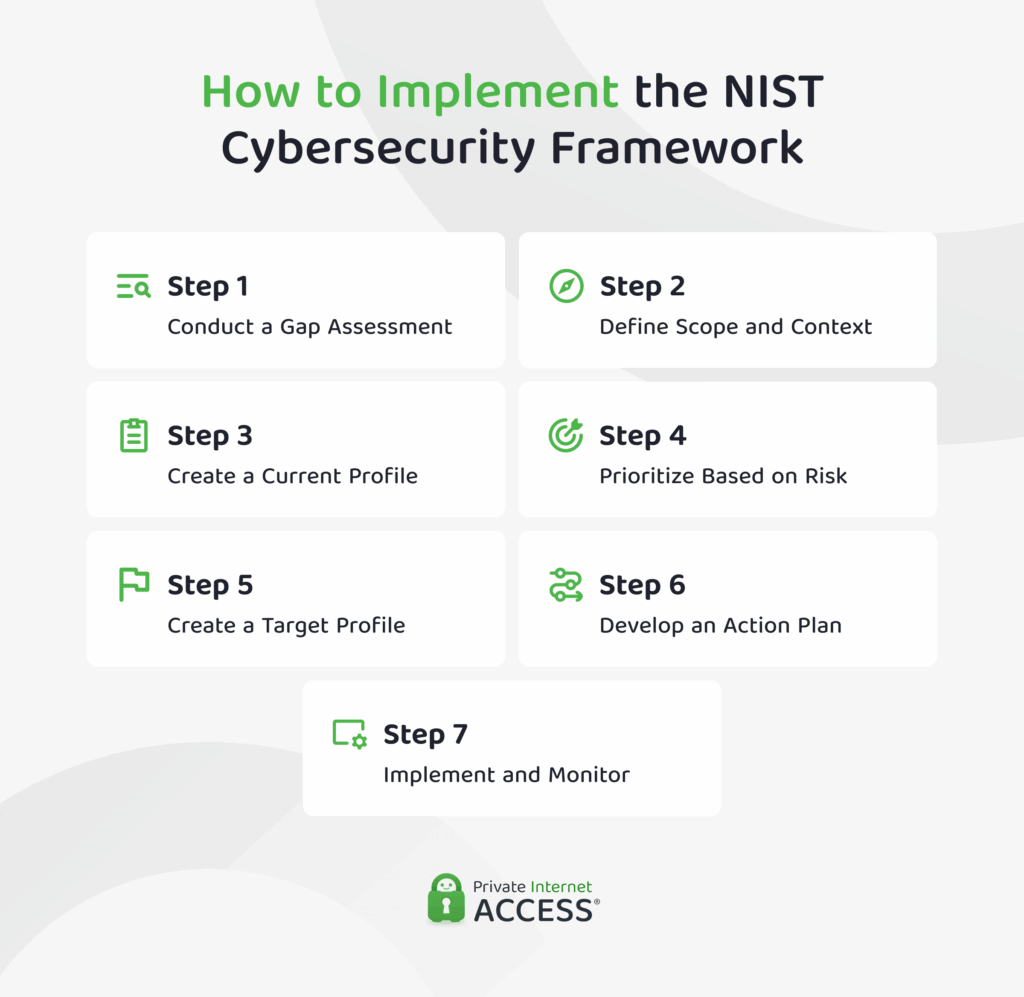
Implementing the NIST CSF doesn’t require organizations to start from scratch. The framework can work with existing security programs and adopted gradually based on business priorities and risk levels.
Step 1: Conduct Gap Assessment
Begin by comparing your current cybersecurity practices against the framework’s functions, categories, and subcategories. This helps identify strengths, weaknesses, and areas that need improvement.
Step 2: Orient
Next, gather information about the environment you are protecting. This includes understanding business objectives, regulatory requirements, existing technologies, known threats, vulnerabilities, and the organization’s overall approach to risk management.
Step 3: Create a Current Profile
The CSF uses profiles to describe an organization’s current and desired cybersecurity state. Creating these profiles helps teams understand what security measures are already in place and where gaps may exist.
Step 4: Prioritize Based on Risk
Not all risks require the same level of attention. Focus first on the systems, assets, and processes that are most important to business operations and most likely targeted.
Step 5: Create a Target Profile
Define the cybersecurity outcomes your organization wants to achieve. The Target Profile should reflect business goals, risk tolerance, industry requirements, and expectations from customers, partners, and regulators.
Step 6: Develop an Action Plan
Use the results of the gap assessment and risk prioritization process to create a roadmap. The plan should define specific objectives, responsibilities, timelines, and resources needed to close identified gaps.
Step 7: Implement and Monitor
Put planned improvements into action and track progress over time. Regular reviews, risk assessments, and performance measurements help ensure the framework continues to support the organization’s security goals as threats and business needs evolve.
Common NIST CSF Implementation Challenges
Although the NIST Cybersecurity Framework is adaptable, organizations can face several challenges when putting it into practice.
- Limited resources: This is one of the most common obstacles for small and mid-sized organizations. Limited cybersecurity budgets and small IT teams can make it difficult to conduct assessments, implement new controls, and continuously monitor risks3.
- Technical complexity: The framework provides guidance on what organizations should achieve, but it doesn’t prescribe exactly how to do it. This means teams must determine which technologies, processes, and controls best fit their environment.
- Integration with existing frameworks and requirements: Many organizations already follow some security standards and regulations, and mapping those requirements to the NIST CSF can take time and planning. The good news is that the framework works alongside other security standards.
How VPNs Support NIST Cybersecurity Framework Compliance
While the NIST Cybersecurity Framework doesn’t push specific technologies, it recognizes that VPNs can help organizations meet several security outcomes outlined in the framework. In particular, VPNs support the Protect (PR) function by helping secure remote access, protect data in transit, and strengthen access controls.
NIST has published guidance on using technologies such as IPsec VPNs to secure network communications4. IPsec encrypts data as it travels across public networks, helping protect sensitive information from interception and unauthorized access.
For organizations with remote employees, contractors, or multiple office locations, remote access VPNs create encrypted connections between users and corporate resources. This helps ensure that only authorized users can access internal systems, even when working outside the organization’s network.
NIST-Recommended Encryption and Access Control
Private Internet Access (PIA) VPN uses NIST-recommended cryptographic algorithms5 and key lengths for authentication, encryption, and integrity protection. The service supports secure remote access, helping organizations protect communications between remote users and internal resources.
PIA’s open-source apps offer a high degree of transparency, allowing security teams to review the software and align deployment decisions with governance and risk management practices.
FAQ
What is the NIST Cybersecurity Framework?
The NIST Cybersecurity Framework is a risk-based set of cybersecurity guidelines developed by NIST. It helps organizations identify, manage, and reduce cybersecurity risks using a flexible structure. The framework focuses on security outcomes rather than specific technologies or controls. Organizations of all sizes can adapt it to their unique needs and risk environments.
What is the NIST Cybersecurity Framework overview and what does it include?
The NIST Cybersecurity Framework focuses on six core functions that help organizations manage cybersecurity risk: Govern, Identify, Protect, Detect, Respond, and Recover. The framework also includes implementation tiers and organizational profiles that help businesses assess and improve their security posture.
What is NIST Cybersecurity Framework 2.0 and what changed?
NIST Cybersecurity Framework 2.0 is the latest version of the framework and expands its use beyond critical infrastructure organizations. The most significant change is the addition of the Govern function, which places greater emphasis on governance and risk management. The framework was also updated from 108 to 106 subcategories and includes additional implementation resources to make it more accessible to a broader range of organizations.
How do organizations use the NIST Cybersecurity Framework in practice?
Organizations use the NIST Cybersecurity Framework to assess their current security posture and identify areas for improvement. Implementing the framework helps them understand risks, set cybersecurity goals, and prioritize security investments. Many organizations create Current and Target Profiles to measure progress and guide decision-making.
Is the NIST Cybersecurity Framework required for compliance?
No, the NIST Cybersecurity Framework is generally voluntary. Most organizations aren’t legally required to adopt it, although some federal agencies and government contractors must align with NIST standards. The framework itself isn’t a compliance law and doesn’t provide certification, but serves as a reference model instead.
Can VPN use support parts of a NIST Cybersecurity Framework program?
Yes, VPNs can support parts of a NIST Cybersecurity Framework program, particularly within the Protect function. VPNs help secure remote access, encrypt data in transit, and strengthen access controls for users connecting to organizational resources. NIST guidance includes technologies such as IPsec VPNs for protecting network communications.
References:
1. NIST Cybersecurity Framework (CSF) – Proofpoint
2. The NIST Cybersecurity Framework Implementation Tiers Explained – CyberSaint Security
3. Common Challenges in NIST Compliance – Cynomi
4. Guide to IPsec VPNs – NIST
